The brushed vs brushless debate is older than half the RC hobby forums on the internet. It also gets buried in specs that don't actually help you make a decision. Here's what you need to understand: these aren't just different levels of the same thing. They're fundamentally different approaches to turning electrical energy into rotation. The right choice depends entirely on what you're doing with the car — not on which sounds more impressive.
How Brushed Motors Work
A brushed motor has four main parts: the stator (the outer shell with fixed permanent magnets), the rotor (the spinning armature with wound copper coils), the commutator (a segmented ring attached to the rotor), and the brushes (carbon contacts that press against the commutator).
Current flows through the brushes into the commutator, energising the armature coils and creating an electromagnetic field that reacts against the stator magnets — the rotor spins. As it spins, the commutator mechanically switches which coils receive current, maintaining continuous rotation. It's elegant in its simplicity. It's also the part that eventually wears out, because those carbon brushes are literally rubbing against the spinning commutator thousands of times per minute.
"Brushed motors are not old technology — they are proven technology. Every time you need reliability over performance, brushed wins."
How Brushless Motors Work
A brushless motor flips the arrangement. The permanent magnets are on the rotor; the wound coils are on the fixed stator. Because there's no commutator, the motor needs electronic commutation — the ESC itself switches which stator coils are energised, creating a rotating magnetic field that drags the permanent-magnet rotor around with it.
No brushes. No commutator. No mechanical contact between moving and stationary parts. The result: dramatically lower friction, less heat generation, and a theoretical lifespan measured in tens of thousands of hours rather than hundreds.
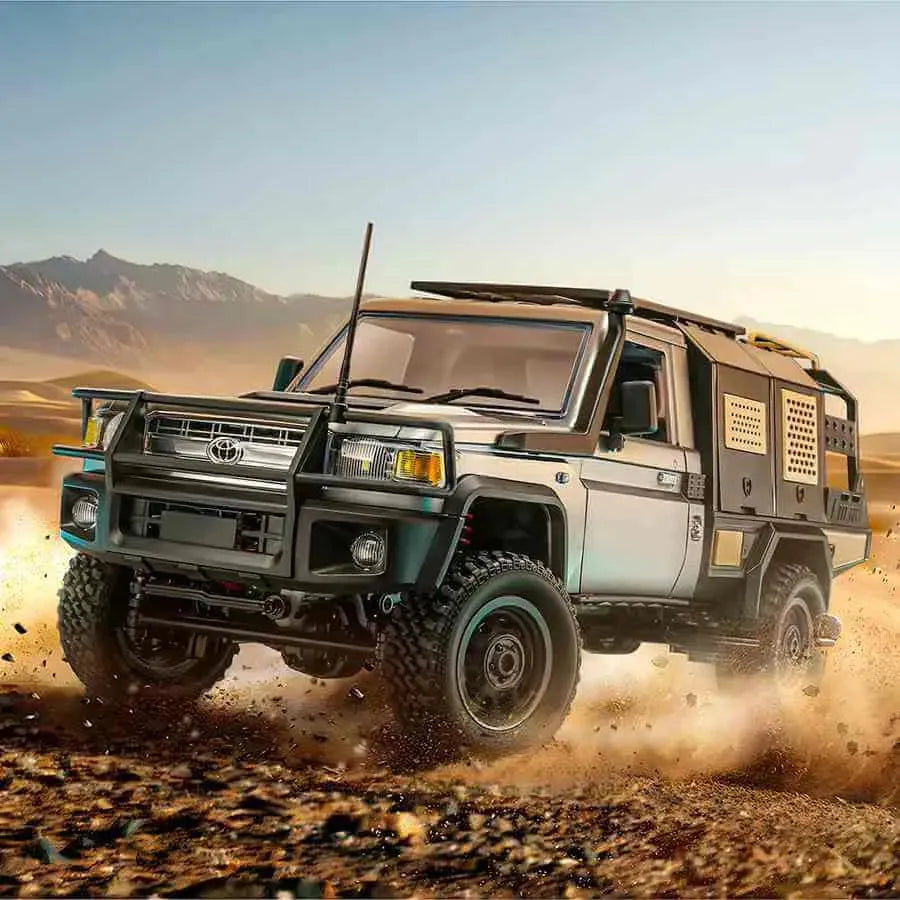
Brushless combos are now available for most popular RC platforms in India
The Real-World Differences
| Characteristic | Brushed | Brushless |
|---|---|---|
| Efficiency | 65–75% | 85–95% |
| Heat generated | Higher | Lower |
| Maintenance | Brush replacement every 50–100 hours | Bearings only — every few hundred hours |
| RPM range | 5,000–15,000 KV | 2,000–10,000+ KV (higher control) |
| ESC requirement | Simple 2-wire brushed ESC | 3-phase brushless ESC (matched carefully) |
| Entry cost (India) | ₹300 – ₹1,200 | ₹1,500 – ₹5,000+ |
| Best for | Beginners, casual use, RTR | Performance builds, upgrades, competition |
Which One Should You Choose?
Choose Brushed If...
You're new to the hobby, running a stock RTR car, don't want to think about motor/ESC matching, or you're buying for a child. Brushed systems are forgiving, simple, and easily replaced when something goes wrong.
Choose Brushless If...
You've been in the hobby for a while, you want noticeably more speed and runtime, or you're specifically building a performance RC. Brushless motors also run cooler — a real advantage in Indian summer heat where brushed motors thermal out faster.
💡 India-Specific Note
In Indian summer (April–June), ambient temperatures of 42–45°C shorten brushed motor life noticeably. Brushes wear faster in heat, and the higher internal resistance of brushed motors means more heat generated per watt of power. If you're running heavily in summer, brushless runs significantly cooler and is worth the upgrade investment.
The Upgrade Path in India
The most common upgrade is pairing a brushless motor + new ESC combo. In India, Surpass Hobby, Hobbywing, and Racerstar combos are the most accessible. A 3650 3900KV brushless motor with a 60A ESC combo costs around ₹2,500–4,000 and transforms most mid-range crawlers and bashers.
The key rule when upgrading: always replace motor and ESC together. You cannot use a brushless motor with a brushed ESC. The ESC is the commutation controller — take one out of the equation and nothing works.
If you're shopping for RC cars in our showroom, most of our crawlers and trail trucks already run brushless systems from the factory — saving you the upgrade cost entirely.
Frequently Asked Questions
Is brushless always better than brushed?
Not always. Brushed motors are simpler, cheaper, and easier to maintain — perfect for beginners. Brushless motors are more efficient and powerful but require matched ESCs and cost more. For casual use, brushed is often the smarter choice.
Can I put a brushless motor in my brushed RC car?
Yes, but you must also replace the ESC simultaneously. A brushed ESC cannot commutate a brushless motor. Swapping only the motor without the ESC will result in a non-functional or damaged system.
How long do brushed motors last?
Typically 1,000–3,000 hours depending on intensity and conditions. In dusty Indian environments, clean your motor regularly with compressed air — debris between brushes and commutator accelerates wear significantly.